STEFAN LOHAUS
01 / Artistic Practice

ARTISTIC
PRACTICE.

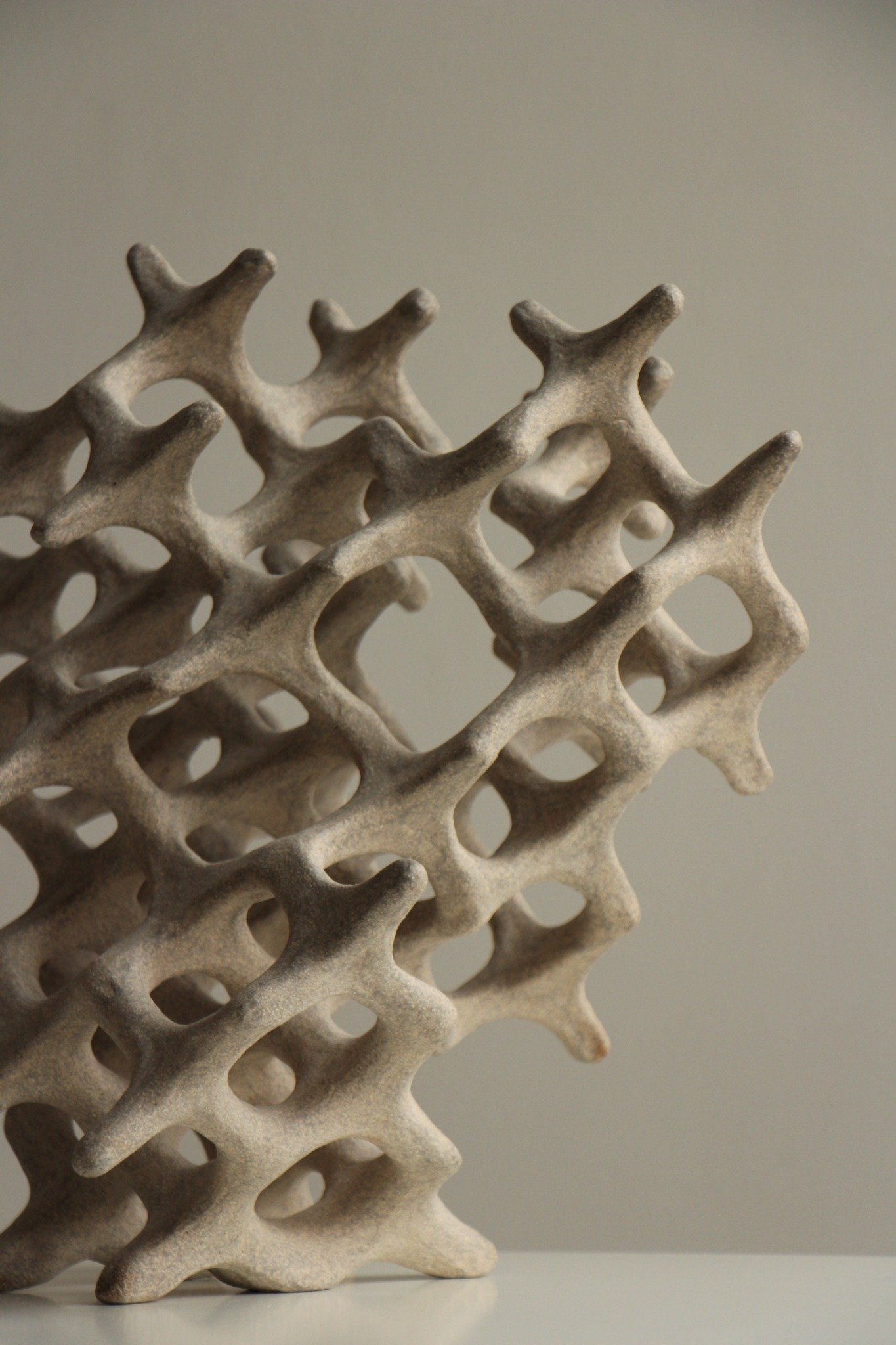
Through ceramic sculptures, I explore how order, symmetry, and entropy shape physical forms. I’m interested in how the collective behavior of individual atoms gives rise to structures at larger scales, and how these structures transform when energy is introduced. Clay and glaze are both medium and subject in my practice, undergoing their own structural transformations through heat in the kiln.

Scientific Research

My research explores how energy is stored, transferred, and transformed within physical systems. I am particularly interested in vibrations, wave propagation, and the dynamics of matter, from atomic and molecular systems to large-scale space structures.

TRANSMISSION ELECTRON MICROSCOPY · NANOSCALE CRYSTALLITES
01 / RESEARCH EXPLAINED

At the atomic scale, thermal energy manifests primarily as vibrations. Atoms move collectively, forming waves that carry energy through a material.

In magnetic materials, thermal energy can also show up as magnetic disorder. As temperature increases, the orientations of electrons' magnetic moments become increasingly random. This randomness, along with the constant motion of atoms vibrating around their positions, contributes to a material's entropy.

Atomic vibrations and magnetism are not independent. Energy can flow between vibrational waves and magnetic moments. This interaction is known as spin–phonon coupling.

Understanding these interactions is important for developing quantum technologies that rely on electron spins and designing materials with zero thermal expansion.

02 / EXPERIMENTAL WORK
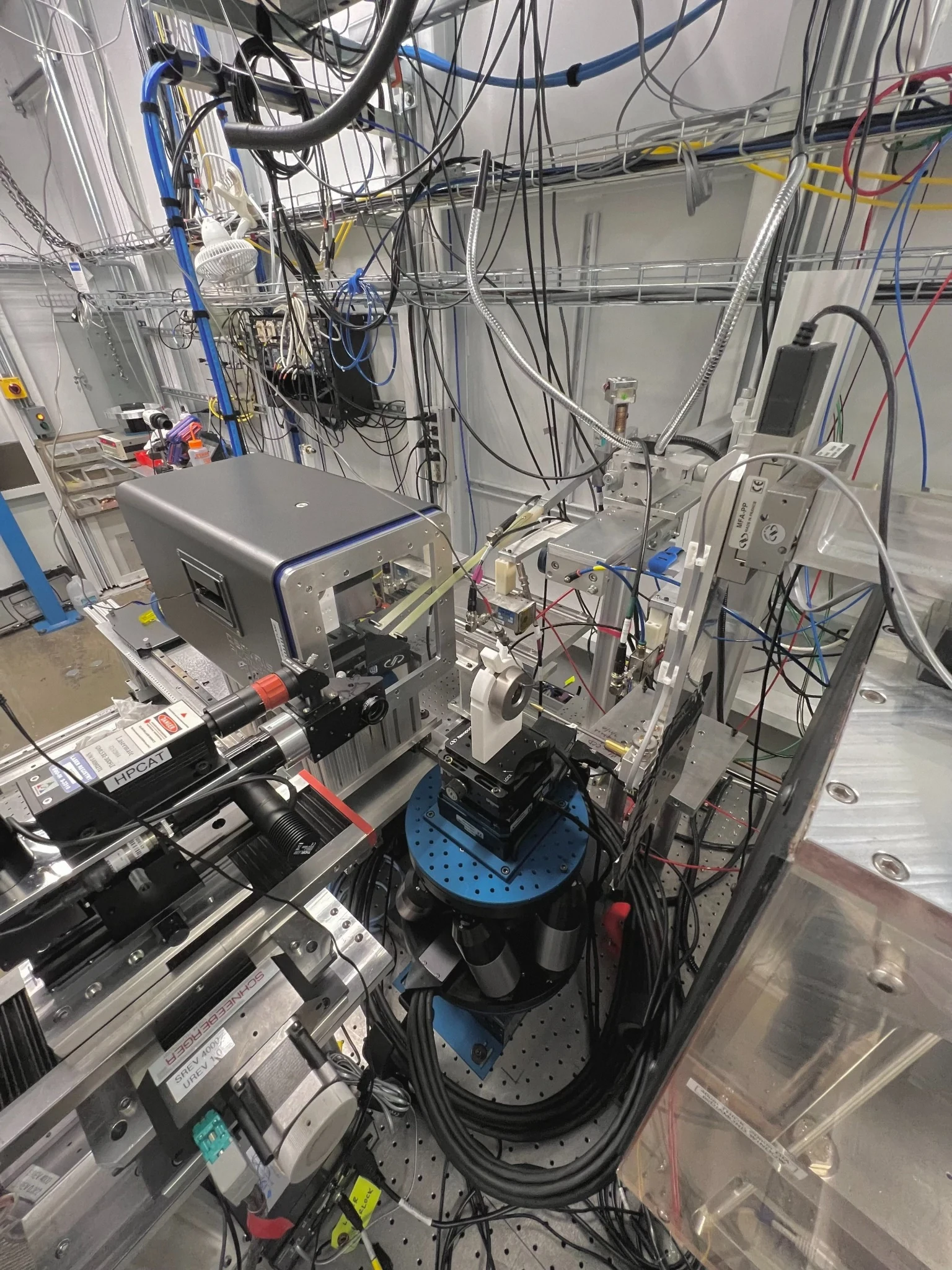
I use a range of spectroscopic techniques to excite and measure atomic vibrations and magnetic excitations in materials. These include neutron and X-ray scattering at large-scale national research facilities.
03 / SELECTED RESEARCH
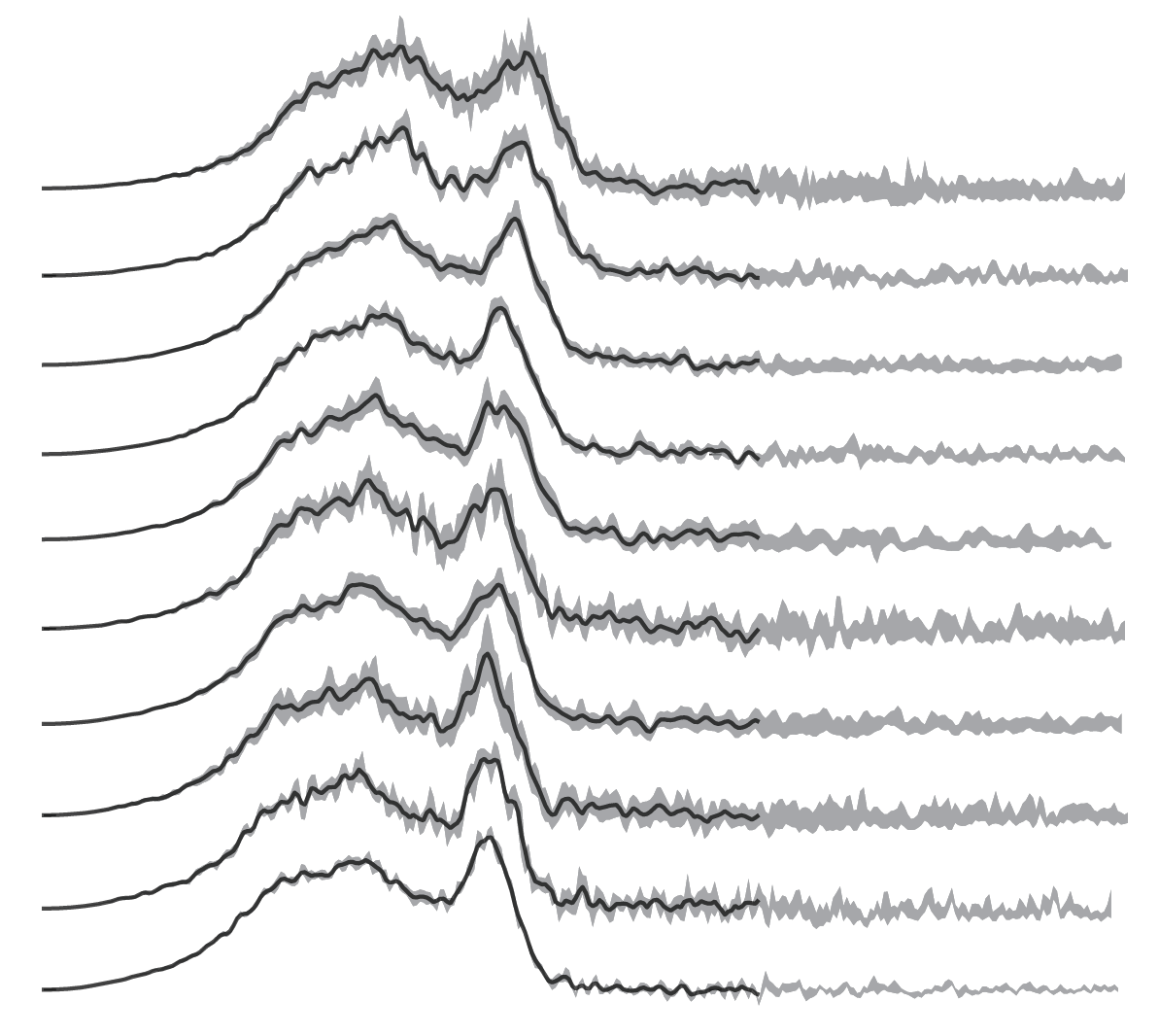
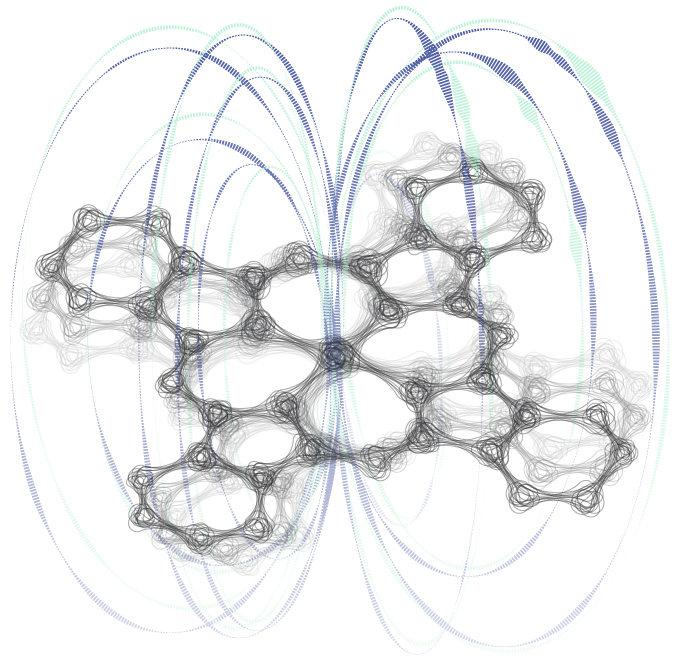
Molecular Quantum Sensing research visualization

Molecular Quantum Sensing

The magnetic moments of individual atoms and molecules are sensitive to their surroundings, making them promising candidates for nanoscale sensors. However, interactions with atomic vibrations can disrupt their magnetic states. I developed an experimental method to identify which vibrations interact with these magnetic moments, investigating how molecular structure could be used to control these interactions.

Invar Effect research visualization

Invar Effect

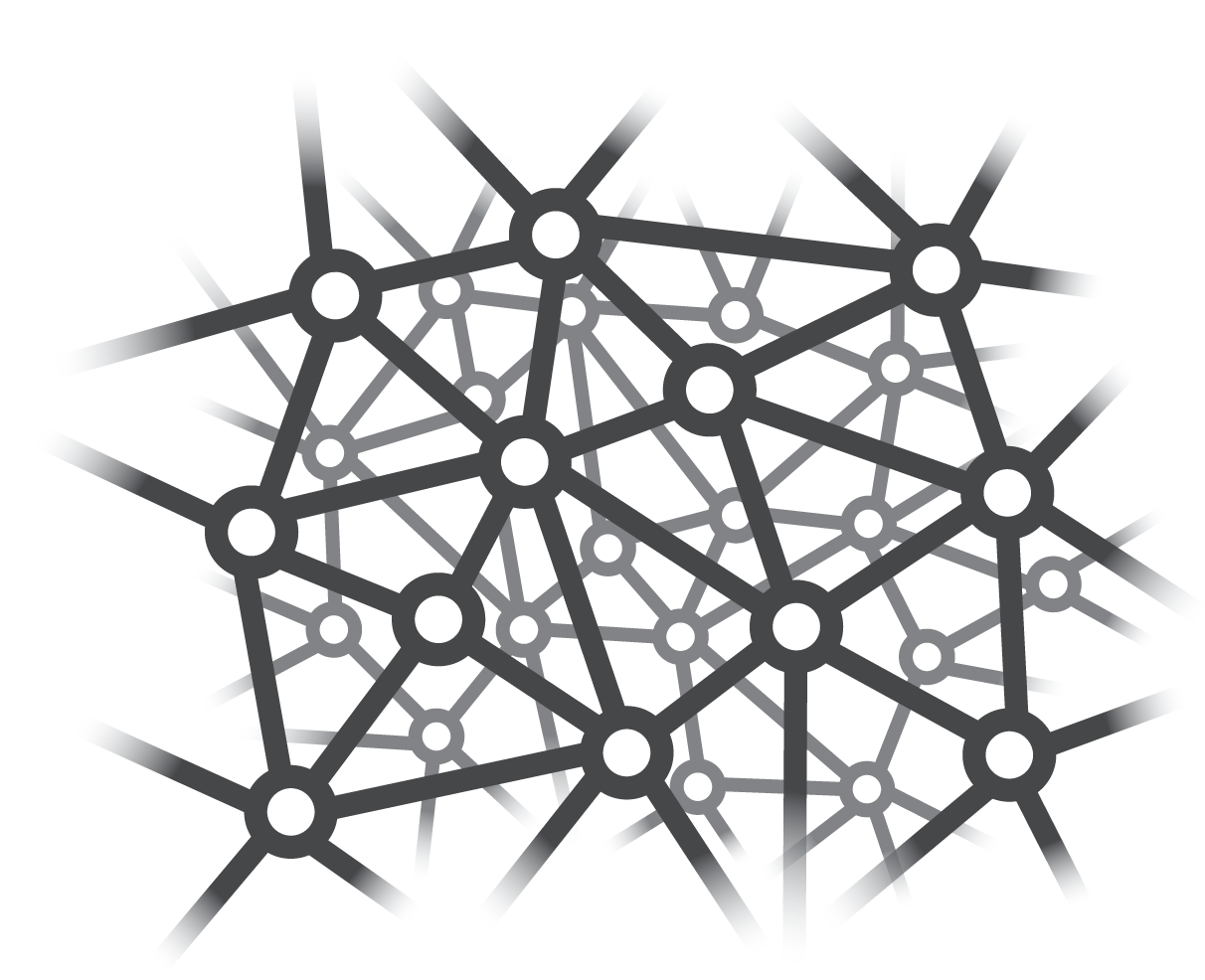
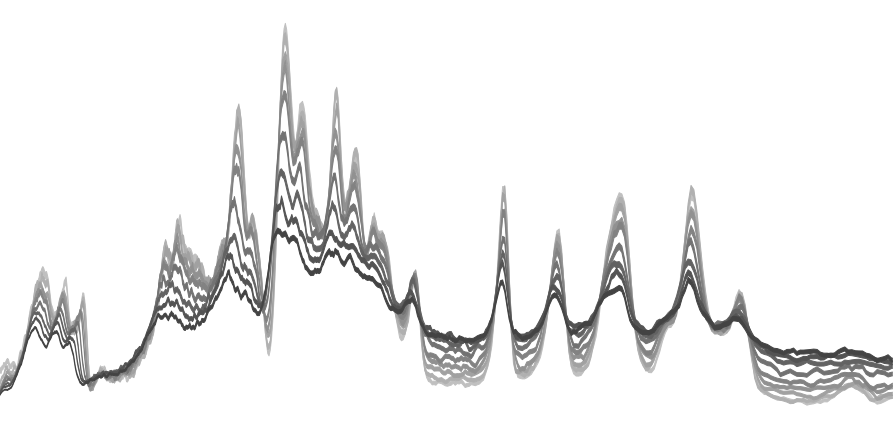
Why do some metals not expand when heated? Usually, materials expand as increasing thermal energy causes atoms to vibrate with larger amplitudes. Invar, a magnetic alloy of iron and nickel discovered in 1896, behaves differently. By combining several experimental techniques, I showed how changes in its magnetic structure cause it to contract, counteracting the expansion caused by atomic vibrations.

Glasses & Disorder research visualization

Glasses & Disorder

What happens when atomic structures lose their periodic arrangement? Unlike crystals, glasses have disordered atomic structures. I studied how this disorder affects the thermodynamics and dynamics of matter, measuring the viscosity of metallic glasses in their supercooled liquid state and investigating the entropy associated with melting.

Structural Dynamics research visualization

Structural Dynamics

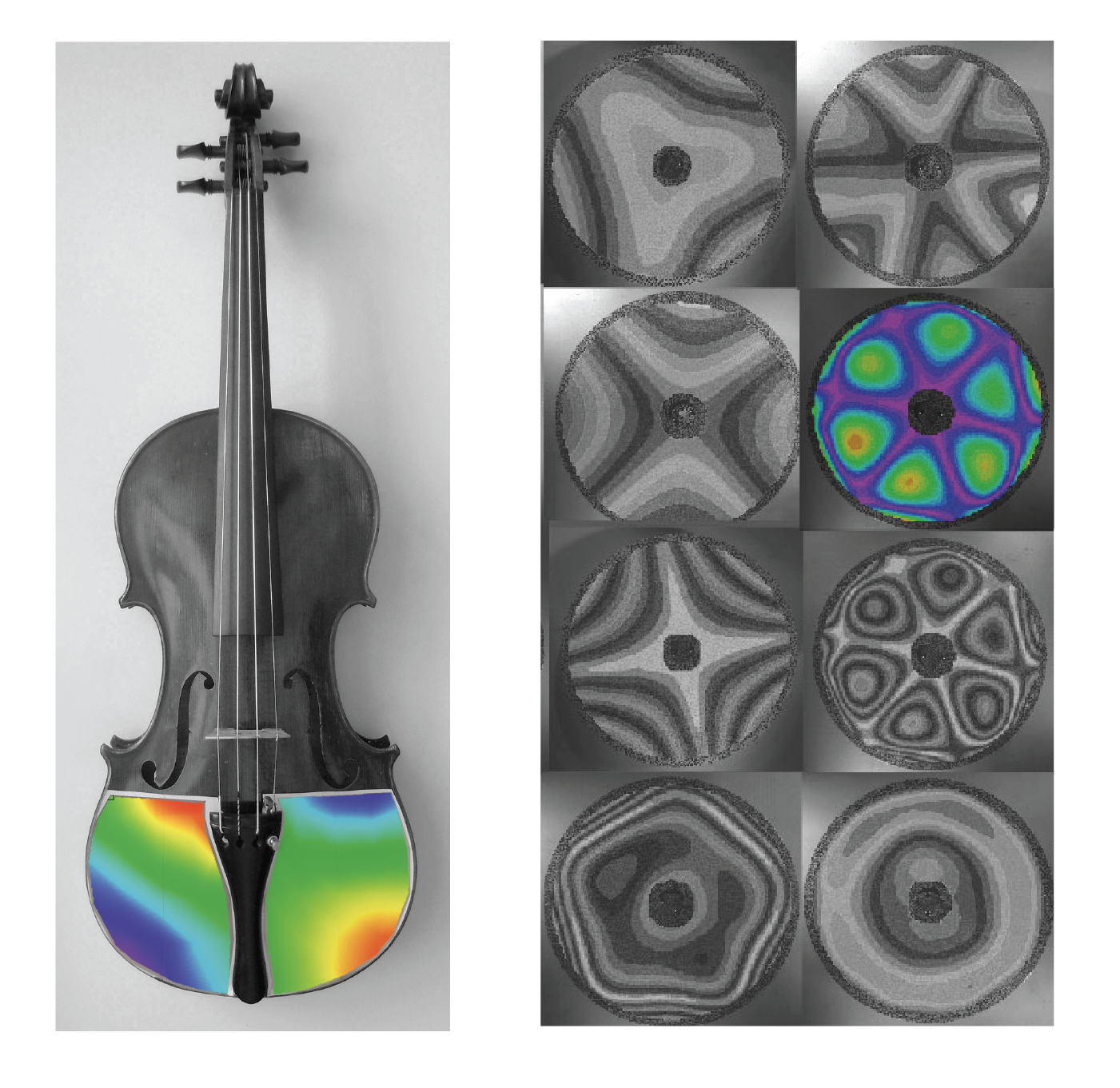
How do vibrations affect the behavior and stability of macroscale structures? I measured the vibrational modes responsible for producing sound in a violin to help develop a more comfortable chin rest without compromising its acoustic performance. I also investigated nonlinear vibrations in ultrathin structures designed for a space-based solar collector, where strong resonances can threaten structural stability.

RELATED PUBLICATIONS
Black-and-white macro photograph of opposing diamond anvil tips with sample between them
DIAMOND ANVIL CELL · Samples are compressed between two diamond tips to create extreme pressure conditions.

Peer-reviewed publications

2026
Journal of the American Chemical Society
Experimental Quantification of Spin–Phonon Coupling in Molecular Qubits Using Inelastic Neutron Scattering
S. H. Lohaus, K. T. Xia, Y. Cheng, R. G. Hadt
2025
Physical Review B
Thermodynamic origin of the pressure-induced Invar effect: General criterion and experimental study of Fe₆₈Pd₃₂
E. R. Priesen Reis, P. Guzman, S. H. Lohaus, A. Lin, C. M. Bernal-Choban, B. Fultz, J. Y. Zhao, G. Shen, M. Y. Hu, E. E. Alp, B. Lavina
2025
Physical Review Materials
Diffuse intensity from phonon noise in inelastic neutron scattering
C. N. Saunders, V. V. Ladygin, D. S. Kim, C. M. Bernal-Choban, S. H. Lohaus, G. E. Granroth, D. L. Abernathy, B. Fultz
2024
Communications Materials
Atomistic origin of the entropy of melting from inelastic neutron scattering and machine learned molecular dynamics
C. M. Bernal-Choban, V. Ladygin, G. E. Granroth, C. N. Saunders, S. H. Lohaus, D. L. Abernathy, J. Y. Y. Lin, B. Fultz
2024
Physical Review B
Pressure induced Invar effect in Fe₅₅Ni₄₅: An experimental study with nuclear resonant scattering
P. Guzman, S. H. Lohaus, C. M. Bernal-Choban, B. Fultz, J. Y. Zhao, G. Shen, M. Y. Hu, E. E. Alp, B. Lavina
2024
Journal of Porphyrins and Phthalocyanines
Quantifying the effects of peripheral substituents on the spin-lattice relaxation of a vanadyl molecular quantum bit
S. H. Lohaus, N. P. Kazmierczak, K. M. Luedecke, B. Marx, V. N. Nemykin, R. G. Hadt
2023
Review of Scientific Instruments
A miniaturized piezoelectric Mössbauer spectrometer with feedback control
P. Guzman, C. M. Quine, S. H. Lohaus, L. Schul, R. Toda, V. J. Scott, B. Fultz
2023
Nature Physics
A thermodynamic explanation of the Invar effect
S. H. Lohaus, M. Heine, P. Guzman, C. M. Bernal-Choban, C. N. Saunders, G. Shen, O. Hellman, D. Broido, B. Fultz
2023
Materialia
Vibrational dynamics in the undercooled liquid of ultra-fragile metallic glasses
H. L. Smith, C. N. Saunders, C. M. Bernal-Choban, S. H. Lohaus, C. J. Stoddard, L. K. Decker, J. Y. Y. Lin, J. L. Niedziela, D. L. Abernathy, J.-H. Na, M. D. Demetriou, B. Fultz
2022
Physical Review B
Thermal expansion and phonon anharmonicity of cuprite studied by inelastic neutron scattering and ab initio calculations
C. N. Saunders, D. S. Kim, O. Hellman, H. L. Smith, N. J. Weadock, S. T. Omelchenko, G. E. Granroth, C. M. Bernal-Choban, S. H. Lohaus, D. L. Abernathy, B. Fultz
2020
Physical Review Materials
Thermodynamic stability and contributions to the Gibbs free energy of nanocrystalline Ni₃Fe
S. H. Lohaus, M. B. Johnson, P. F. Ahnn, C. N. Saunders, H. L. Smith, M. A. White, B. Fultz
2018
Journal of Sound and Vibration
Nonlinear vibration of transversely-loaded spinning membranes
M. Delapierre, S. H. Lohaus, S. Pellegrino
2015
IEEE International Conference on Robotics and Automation (ICRA)
Gesture based human - Multi-robot swarm interaction and its application to an interactive display
J. Alonso-Mora, S. H. Lohaus, P. Leemann, R. Siegwart, P. Beardsley

PhD thesis

2023
05 / ACADEMIC BACKGROUND
2023–2025Postdoctoral Scholar · Physical Chemistry · Caltech
2023PhD Materials Science · Caltech
2017MS Space Engineering · Caltech
2016 / 2014MS / BS Mechanical Engineering · ETH Zürich

Investigating structure and dynamics of matter through scientific research and ceramic sculpture.

Artist
&
Materials
Scientist

Berlin, Germany
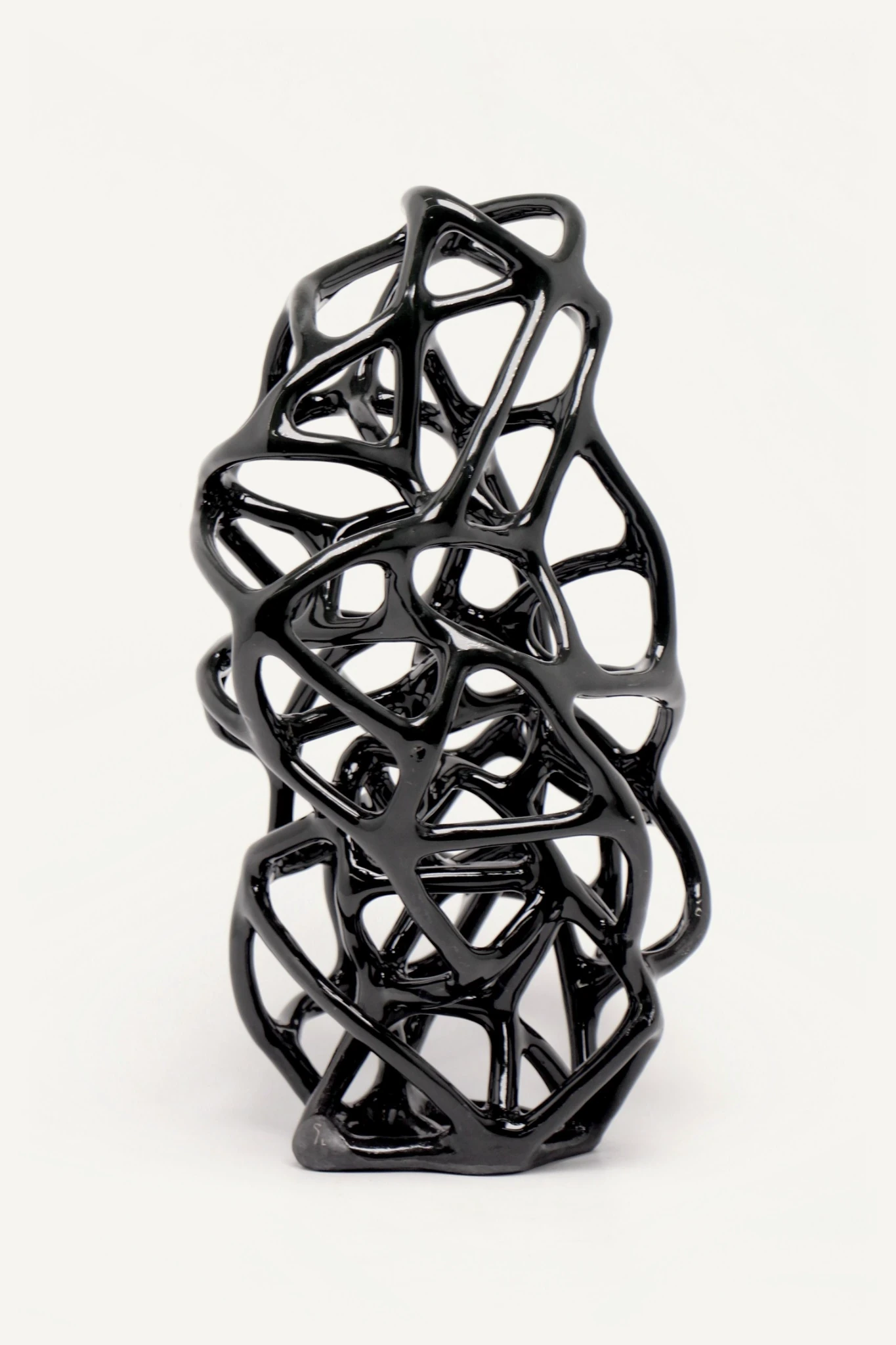
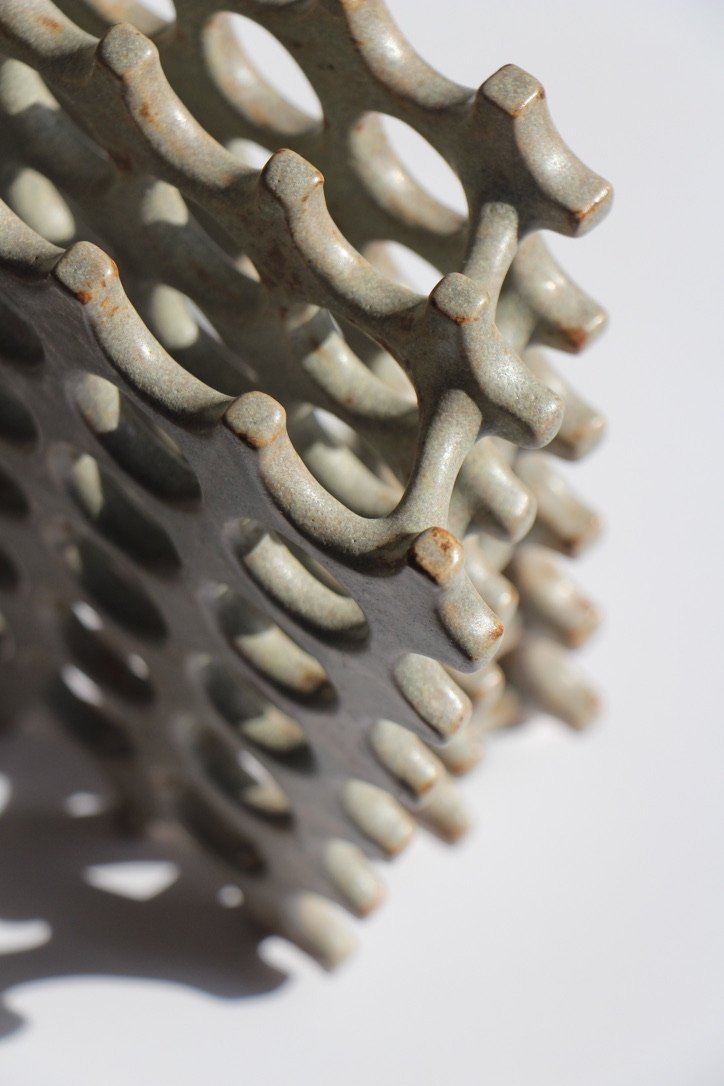
Glossy black ceramic lattice sculpture, Disorder
Scroll to explore ↓

Artist
&
Materials
Scientist

Berlin, Germany
Disorder
Glazed stoneware / 2026
01 / Artistic practice

ARTISTIC
PRACTICE.

Through handbuilding with clay, I reinterpret microscopic physical phenomena, exploring how the structure and behavior of matter can take sculptural scales. I'm interested in how interactions between individual atoms give rise to larger-scale structures, and how these structures hold and respond to energy. Through my practice, scientific concepts take on a new context and purpose, allowing me to look at the phenomena I study in the lab from a different perspective. Clay and glaze are both medium and subject, undergoing their own structural transformations through heat in the kiln.

02 / Scientific practice
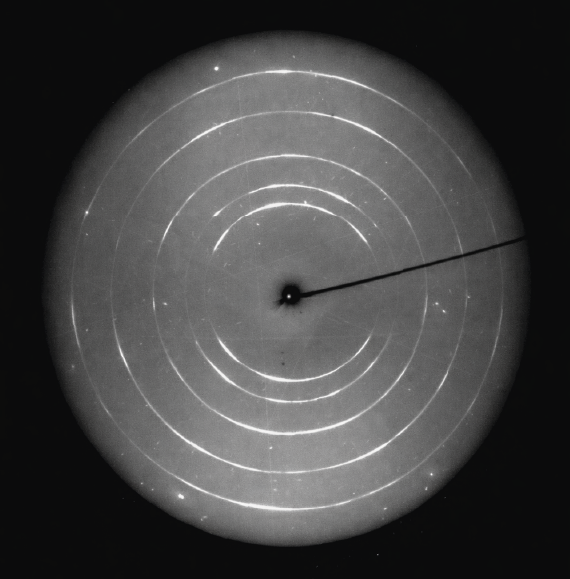
Experimental diffraction pattern with concentric rings
Diffraction pattern / Experimental X-ray data

SCIENTIFIC
PRACTICE.

As a materials scientist, I study atomic-scale phenomena in matter, from crystalline solids and molecular crystals to disordered glasses. I investigate how energy is stored and transferred within materials, and how these processes manifest through atomic vibrations, structural transformations, and magnetic behavior. Through scattering and spectroscopy experiments, I measure these microscopic phenomena to understand how they shape the macroscopic properties of matter.

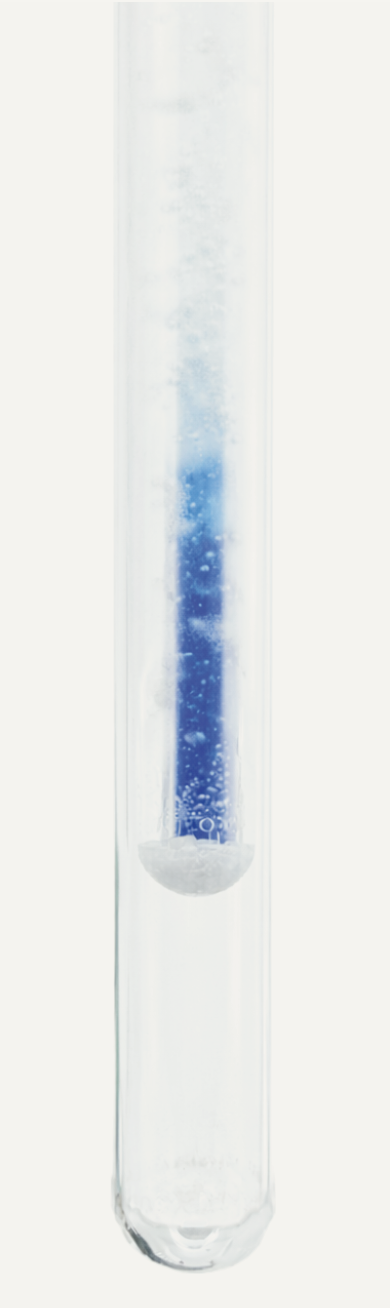
Blue copper phthalocyanine sample in a glass tube
Copper phthalocyanine / Material sample in liquid nitrogen
Experimental beamline apparatus used to measure the atomic dynamics of materials
Experiment at synchrotron beamline / Probing atomic structure with X-rays
03 / About
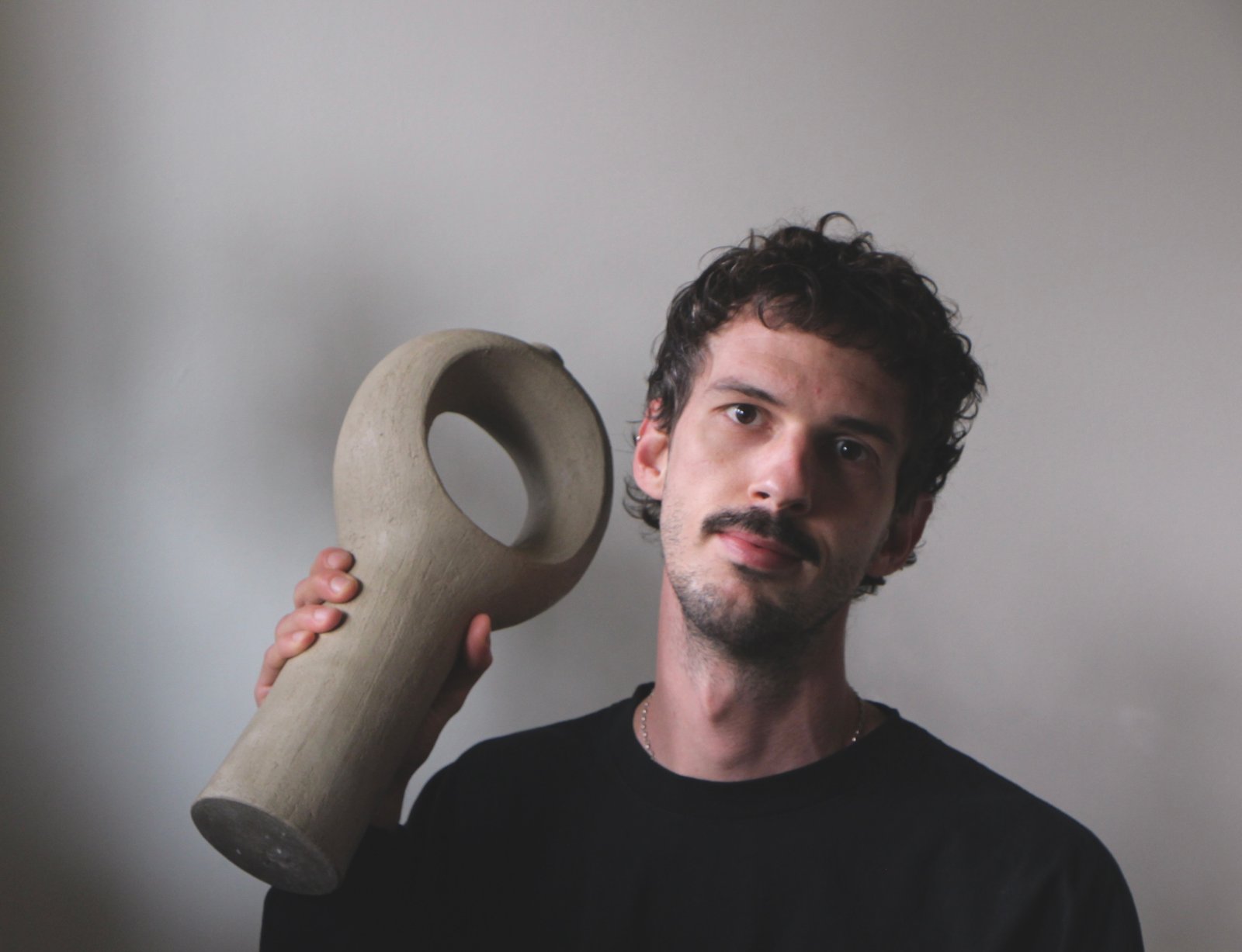
Stefan holding an unfinished ceramic sculpture

STEFAN
LOHAUS

From São Paulo, based in Berlin.

PhD in Materials Science and independent artist.